

Corgis bite ankles because they are bred as herding dogs, using nipping to control movement. This behavior is often triggered by running, fast movement, or boredom.
You can stop it immediately by freezing (“Be a Tree”) and redirecting the dog to a toy. This guide covers 2026’s proven techniques from trainers and corgi owners to address both immediate reactions and long-term training for a calm, obedient pet.
- Corgi ankle biting is an instinctive herding behavior, not aggression—they’re trying to control your movement (AI Overview, MyCorgi.com).
- The most effective immediate response is to stop moving completely; this removes the ‘reward’ of moving you (MyCorgi.com, Reddit).
- Long-term success requires consistent training, mental stimulation, and avoiding rough play that triggers herding (AI Overview, Rover).
How Do You Stop a Corgi from Biting Ankles Immediately?
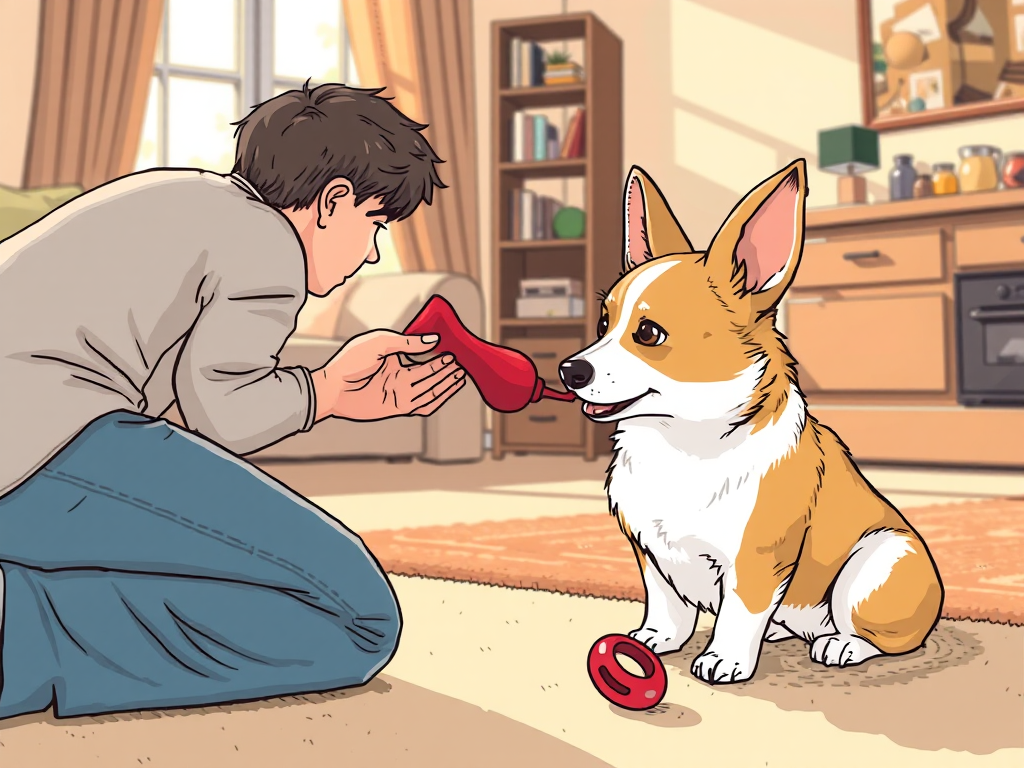
When your corgi nips at your ankles, your immediate reaction determines whether the behavior stops or escalates. The goal is to remove whatever the dog finds rewarding about the action. Since corgis nip to herd—meaning to move you—the most powerful tool is to deny them that result.
Combine this with redirection and clear verbal cues to break the cycle quickly. These techniques, validated by experienced owners and rescue organizations, work within seconds to minutes when applied consistently.
Be a Tree: Stop Moving the Moment You Feel a Bite
The “Be a Tree” technique is the single most effective immediate response recommended by multiple sources, including MyCorgi.com and South Texas Aussie Rescue. The method is simple: the moment you feel your corgi’s teeth on your skin or clothing, freeze completely. Do not look at the dog, do not talk, and do not move.
Stand perfectly still like a tree until the dog disengages and calms down. This works because the corgi’s herding instinct is to nip at your heels to make you move in a desired direction. By standing still, you render the behavior pointless—there is no “herd” to move.
South Texas Aussie Rescue explicitly advises: “It is better that you stop moving and don’t even look at them. Just wait for them to stop the behavior and calm down.” A Reddit user confirmed its effectiveness, stating: “I found the best way to stop my corgi’s ankle biting behaviour was to stop and ignore her…she essentially was trying to herd me.” Crucially, this is not punishment. You are not scolding or physically correcting the dog.
You are simply removing the attention and outcome the dog seeks. Once the dog has stopped and is calm, you can resume normal, calm interaction. This teaches the dog that biting leads to a complete lack of engagement, not the fun chase or reaction they wanted.
Redirect to Toys: Channel the Herding Instinct Safely
Redirecting your corgi’s biting impulse to an appropriate object is a core strategy. You must satisfy their innate drive to nip and chase something, but channel it away from your body. Keep a selection of toys readily available, especially during walks or active playtimes.
The moment you see your corgi crouch, stare, or lunge toward your ankles, present a toy instead. Effective toy types include:
- Chew Toys: Durable rubber or nylon toys that satisfy the mouthing urge.
- Herding Balls: Specifically designed for herding breeds, these are large, often bouncy balls that the dog can chase and nip at without targeting you.
- Rope Toys: Excellent for tug-of-war, which can redirect a biting impulse into a structured game.
- Plush Toys: For gentler mouthing, though supervise to prevent destruction.
MyCorgi.com community members suggest bringing a rope toy on walks explicitly to transfer the behavior from your pants to the toy. The key is anticipation; if you wait until after the bite, you miss the opportunity. You must intervene the moment you see the herding posture.
Herding balls are frequently cited on Reddit as a favorite tool because they directly mimic the moving target the dog wants to control. Always have a toy within arm’s reach in high-trigger situations.
Verbal Cues: The ‘Ouch’ or ‘No Bite’ Command
A sharp, consistent verbal cue teaches your corgi that biting ends the fun. This method pairs a specific sound with an immediate consequence. Follow these steps precisely every single time:
- Say “Ouch” or “No Bite”: The moment any tooth makes contact with your skin or clothing, say the chosen phrase in a firm, loud, high-pitched voice. The sound should be sharp and unexpected, not angry or prolonged.
- Immediately Stop All Play: Cease the activity instantly. If you were walking, stop. If you were playing, drop the toy and become boring.
- Turn Away and Ignore: Physically turn your back on the dog or walk away for a short timeout. Ignore the dog completely for 30 to 60 seconds. This withdrawal of attention is the consequence.
- Resume Calm Interaction: After the timeout, calmly resume your previous activity without drawing attention to the dog. If the dog is calm, you can offer praise or a treat for good behavior.
Quora users emphasize the “sharp OUCH and leave the area for a minute” method. A YouTube training video demonstrates this technique, highlighting that the voice should be a startling sound, not a yell.
Consistency across all family members is non-negotiable. If one person says “Ouch” and stops play while another laughs and continues, the dog receives mixed signals and the behavior will persist. Everyone in the household must use the same command and follow the exact same protocol every time, as noted in the AI Overview.
Train Alternative Behaviors: Reward ‘Sit’ and ‘Down’
Proactively teaching your corgi an incompatible behavior gives them a positive job to do instead of nipping. The goal is to catch the dog before the bite, when you see signs of overexcitement or herding focus (staring, crouching, whining). At that moment, give a clear command like “Sit” or “Down.” If the dog obeys, immediately reward them with a high-value treat (like small pieces of chicken or cheese) and enthusiastic praise.
This does two things: it redirects their mental energy into a controlled, obedient action, and it builds a positive association with being calm and responsive in an exciting situation. Quora users recommend this as a way to “give the dog a positive job to do instead of nipping.” Start practicing this in a quiet, low-distraction room. Ask for a “Sit” randomly during the day and reward.
Once reliable, begin practicing in slightly more distracting environments, like the backyard. Finally, introduce it in the specific situations that trigger ankle biting, like when someone enters the room or during a walk.
The dog learns that excitement now cues “Sit” for a reward, not “Nip” for a chase. Use especially tasty treats initially to make the alternative behavior more appealing than the herding instinct.
Why Do Corgis Bite Ankles? The Herding Instinct Explained

Understanding that ankle biting is a natural, breed-specific behavior—not a sign of a “bad” dog—is critical for effective training. This behavior is deeply embedded in their genetics from centuries of selective breeding for a specific job. Recognizing the triggers and the instinct’s purpose helps you respond appropriately without frustration or punishment that could damage your bond.
Are Corgis Considered Ankle Biters?
Yes, corgis are definitively classified as well-known ankle biters among herding breeds. Their small stature does not diminish their strong herding drive. According to People Also Ask (PAA) data and competitor analysis, other breeds that share this characteristic include:
- Australian Cattle Dogs (Heelers): Known for a very persistent, nipping style focused on the heels.
- Border Collies: May exhibit a strong “eye” (stare) followed by nipping to control movement.
- Australian Shepherds: Often use both nipping and circling behaviors to herd.
Despite their popularity as family pets, corgis retain a powerful “heeler” instinct. They were bred to nip at the heels of cattle to keep the herd moving.
This behavior is so ingrained that they will instinctively apply it to any moving target, including human ankles, especially children who run and move erratically. Competitor analysis confirms that “corgis, despite their small size, have a strong herding drive and are persistent ankle biters.”
Why Do Herding Dogs Bite Ankles?
The ankle bite is a specific tool in a herding dog’s behavioral toolkit. It evolved as a practical method for controlling large, stubborn livestock. As stated in PAA data, “herding dogs may nip at heels or other pets, reflecting their instinct to herd.” Welsh Corgis, historically used as “heelers,” would bite at the hooves of cattle to encourage them to move forward.
Their low-to-the-ground build allowed them to avoid being kicked. This instinct is not directed at causing pain but at eliciting a movement response. The behavior is often triggered by movement—the sight of someone walking or running away activates the chase/herd sequence.
This explains why it’s “especially noticeable around young children” who are constantly in motion. Additionally, PAA notes that nipping can serve other purposes: “Some herding dogs might also nip as a way to get attention, out of boredom, and for most puppies, as a way of playing or teething.” Therefore, while the primary driver is herding instinct, secondary factors like excitement and boredom can exacerbate the behavior.
Common Triggers: Running, Fast Movement, and Boredom
Identifying what sets off your corgi’s herding response is the first step to prevention. Based on AI Overview and Rover’s expert summaries, the primary triggers are:
- Running or Quick Movements: This is the most direct trigger. Any rapid motion—someone jogging, a child darting across a room, even quick hand gestures—can activate the chase instinct. The dog sees the moving ankles as a target to control.
- Boredom and Lack of Stimulation: A corgi with unused mental and physical energy will find outlets. Nipping at ankles can become a self-reinforcing game or a way to create exciting interaction. Rover lists “play behavior driven by excitement” and “attention-seeking behavior” as key reasons.
- Overexcitement: During greetings, play sessions, or when someone comes home, a corgi’s arousal level can spike. The nipping is an outburst of that uncontrolled energy.
- Attention-Seeking: If the dog has learned that nipping—even a negative reaction like yelling or chasing—gets a strong response from you, they may repeat it to get any form of attention.
Competitor analysis highlights that “children running around often trigger the strongest herding response in corgis.” Rover’s framework categorizes the causes as: “Breed-specific herding instincts, Play behavior driven by excitement, Attention-seeking behavior, Response to fear or pain.” While fear or pain can cause nipping, in the context of ankle biting in a otherwise playful corgi, the first three are the most relevant.
Long-Term Training: Building a Calm, Obedient Corgi

Stopping ankle bites in the moment is only the first step. For lasting change, you must address the root causes: excess energy, lack of impulse control, and inconsistent boundaries. Long-term success hinges on three pillars: unwavering consistency from everyone in the household, structured obedience training, and providing adequate mental outlets that satisfy the herding drive without targeting people.
Consistency Across All Family Members Is Non-Negotiable
Inconsistency is the primary reason ankle-biting training fails. If the dog is allowed to nip at one person’s ankles but is corrected for nipping at another’s, the dog receives confusing signals.
The behavior will continue because it is sometimes rewarded with attention or play. To ensure consistency:
- Hold a family meeting. Discuss the problem and agree on the specific commands and responses to use (e.g., “Ouch” or “No Bite,” and the “Be a Tree” method).
- Everyone must respond the same way every time. There are no exceptions. If the dog nips, the response must be immediate, uniform, and unemotional.
- Do not allow rough play that encourages nipping. Games like chase or tag where hands and feet are the target must be eliminated. All play should be with toys.
- Track progress together. Briefly check in daily to ensure everyone is following the protocol. Celebrate small improvements.
As the AI Overview states, “Every family member must enforce the same rules consistently.” MyCorgi.com users echo this, emphasizing that “use the same verbal cue and reaction from everyone” is essential to avoid confusing the dog. Competitor analysis notes that “inconsistent responses—some people laughing or playing along—can reinforce the behavior.”
Obedience Training: Puppy Classes and Professional Guidance
Formal training provides the structure and professional insight needed to modify deep-seated instincts. The AI Overview recommends to “Enroll in puppy classes to build on basic training.” The benefits extend beyond basic commands:
- Socialization: Controlled exposure to other dogs and people in a structured setting reduces over-excitement.
- Professional Advice: A trainer experienced with herding breeds can identify subtle triggers and provide tailored strategies for your specific dog.
- Building Reliable Commands: Commands like “Sit,” “Down,” and “Leave It” become reliable even in distracting situations, giving you tools to prevent nipping before it starts.
When selecting a class or trainer, look for those who use positive reinforcement methods (reward-based training). Avoid trainers who rely on punishment or dominance-based techniques, as these can increase anxiety and worsen herding-related behaviors. DogGoneProblems, a professional training service, states that “professional trainers can address specific herding issues and provide tailored strategies.” If ankle biting persists despite diligent home training, seeking a certified professional dog trainer (CDT or similar) for one-on-one sessions is a worthwhile investment.
Mental Stimulation: Agility, Herding Balls, and Puzzle Toys
Physical exercise alone is often insufficient for a corgi. Their intelligence and trainability require challenging mental work to prevent boredom-driven nipping.
A tired mind is a calm mind. Here is a framework for daily mental stimulation:
| Activity | Frequency | Duration | Benefits |
|---|---|---|---|
| Agility Training | 2-3x/week | 30 minutes | Burns high energy, improves obedience and focus, provides a job that channels herding instincts through obstacles. |
| Herding Balls | Daily | 15-20 minutes | Satisfies the specific nipping and chasing instinct safely. The dog “herds” the ball instead of ankles. |
| Puzzle Toys (treat-dispensing) | Daily | 10-15 minutes | Provides mental problem-solving, prevents boredom, keeps dog occupied when you can’t engage directly. |
The AI Overview emphasizes the need to “provide ample mental stimulation, such as agility training or fetching.” Reddit users consistently report that “herding balls are a favorite among corgi owners to safely satisfy the nipping instinct.” Competitor analysis adds that “puzzle toys that dispense treats keep the dog occupied and reduce boredom-related nipping.” Mental stimulation is as important as physical exercise because it addresses the root cause of many behavior problems: an underutilized brain. A corgi that has worked its mind is less likely to invent its own games, like ankle-biting.
Welsh Corgi owners must understand that their pet’s ankle-biting is a natural expression of centuries-old herding genetics. It is not a sign of aggression or a “bad” dog. The most surprising insight is that this behavior is a compliment—your corgi sees you as part of its herd and is trying to do its job.
The solution is not to punish the instinct but to redirect it and teach an alternative response. Start today with the “Be a Tree” technique: the next time you feel a nip, freeze completely. Do not move, do not speak.
Wait for the disengagement. Then, immediately redirect to a toy. Pair this with daily mental stimulation and unwavering consistency from every family member, and you will see a significant reduction in herding behavior within weeks.