

Yes, Welsh Corgis can be good with kids and other pets, but they require proper training and socialization due to their herding instincts, according to 2026 breed experts. This intelligent herding breed can make a loyal family companion, but understanding their unique needs is key to a harmonious home.
Welsh Corgis are generally good with children and other pets when they receive proper training, socialization, and active management from an early age, as confirmed by the American Kennel Club and veterinary sources. However, their energetic, bossy nature means they are not inactive lapdogs and need an active family that can provide consistent guidance.
- Welsh Corgis are generally good with children and other pets when they receive proper training, socialization, and active management from an early age.
- Their herding instincts may cause nipping at running children, so they are better suited for families with older kids (typically age 5+) who understand gentle handling.
- Corgis are not inactive lapdogs; they need active families who can provide consistent exercise, firm guidance, and mental stimulation to channel their energetic, bossy nature positively.
Welsh Corgis: Generally Good With Kids and Other Pets, But With Conditions

The 2026 Expert Consensus on Corgi Family Compatibility
The consensus among 2026 experts is clear: Welsh Corgis can be excellent family pets. According to the AI Overview from Google’s search results, “Welsh Corgis can be excellent family pets, generally good with children and other pets, provided they receive proper training, socialization, and active management.” This view is echoed by the American Kennel Club (AKC) in its February 2026 breed profile, which states that Corgis “can do well with children, but would likely fare better in a home with older kids.” Veterinary sources like PetMD (2025) and familyvet.net reinforce that with proper socialization from a young age, Corgis tend to get along well with both children and other animals.
However, “generally good” does not guarantee every individual Corgi will be suited for family life; temperament can vary based on genetics, early experiences, and individual personality. For a comprehensive overview of the Welsh Corgi breed, including health, grooming, and activity needs, visit our Welsh Corgi category.
Children: Affectionate Companions with Herding Challenges
Corgis are known for their deep bonds with children, but their herding instincts introduce specific considerations. Key points from experts:
- Corgis are affectionate and loyal companions, forming strong attachments to family members (AI Overview).
- Their herding instincts may cause them to nip at the heels of running children, a behavior common in herding breeds (nativepet.com).
- Experts advise against Corgis for families with children under 5 (AI Overview) or under 8 (forpaws.org), as younger children are more vulnerable to nipping and may not understand gentle handling.
- Supervision is essential to prevent or manage nipping incidents (AI Overview).
- Corgis may not tolerate tail-pulling or rough play, which can trigger reactive behaviors (AI Overview).
Younger children, especially those under 5 or 8, are at higher risk because their erratic movements and tendency to pull tails can trigger a Corgi’s herding response. Supervision allows parents to intervene quickly and teach both child and dog appropriate boundaries.
Older children, typically age 5 or 8 and above, are better suited because they can understand and respect the dog’s signals and participate in training. Families must be prepared to actively manage interactions rather than leaving the dog and child unsupervised.
Other Pets: High Success Rate with Early Socialization
Corgis can live harmoniously with other pets, but success depends on early socialization. Key factors:
- Corgis generally get along well with other pets and dogs when socialized from a young age, according to familyvet.net and Hill’s Pet.
- Their high, active nature means they often enjoy playing with other animals, making them suitable for multi-pet households (AI Overview).
- Most Corgis are fine with other pets and children if they have been raised with them from puppyhood (Hill’s Pet).
The success of Corgis with other pets hinges on early and ongoing socialization. Exposing a Corgi puppy to various animals in a controlled, positive manner during the critical socialization period (3-14 weeks) helps prevent fear and aggression later. Gradual introductions to new pets, using positive reinforcement, and supervising initial interactions are crucial.
Corgis’ playful temperament can be an asset, as they often engage in fun activities with other dogs or cats. However, their herding instincts may still manifest as chasing or nipping, so ongoing management is necessary. Families introducing a Corgi to existing pets should proceed slowly and consider professional guidance if needed.
Herding Instincts: Why Corgis May Nip at Heels and How to Manage It
The Herding Background: Instinctive Nipping Behavior
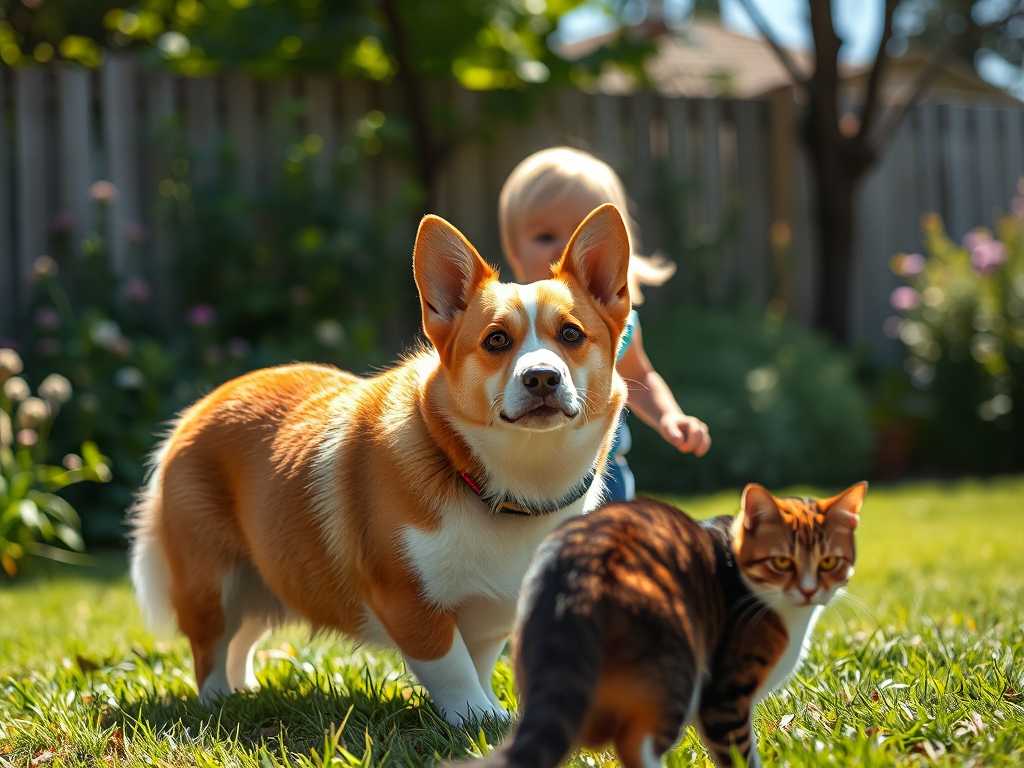
Welsh Corgis were originally bred as herding dogs, specifically for driving cattle by nipping at their heels. This herding instinct is deeply ingrained in their genetics. According to nativepet.com, “Corgis are herding dogs who may have a tendency to nip at kids’ heels.” Orvis notes that Corgis “may nip or herd children if not provided enough exercise.” The behavior is not driven by aggression but by an innate desire to control moving objects.
Borrowmydoggy.com explains that their herding background may lead them to chase and nip at running children or other pets. Understanding this instinct is crucial: nipping is a natural behavior that can be redirected through training, exercise, and mental stimulation.
It is not a sign of a “bad” dog but rather a breed-specific trait that requires proper management. To better understand a Corgi’s overall temperament and energy levels, see our guide on Welsh Corgi Temperament: Are They Calm or High Energy?.
Age and Supervision: Critical Factors for Families with Young Kids
The age of children in the household significantly impacts the suitability of a Corgi. Expert recommendations:
- Families with children under 5 are generally not advised to get a Corgi (AI Overview).
- Herding dogs like Corgis are probably not the best choice for families with children under 8 (forpaws.org).
- Corgis are better suited for households with older children (AKC 2026).
- Supervision during all interactions is non-negotiable to prevent or manage nipping (AI Overview).
Younger children, particularly those under 5 or 8, are more vulnerable because they move erratically, may pull tails or ears, and cannot reliably interpret a dog’s body language. These actions can trigger a Corgi’s herding response, leading to nipping. Supervision allows an adult to intervene before a situation escalates, to teach the child gentle interaction, and to redirect the dog’s behavior.
Even with older children, supervision is still recommended, especially initially. Families must recognize that leaving a Corgi unsupervised with young children is a significant risk factor for incidents.
Exercise and Mental Stimulation: Reducing Nipping Through Activity
Corgis are not inactive “lapdogs”; they require active families who can provide consistent exercise and firm guidance (AI Overview). Insufficient physical and mental activity can lead to pent-up energy, which may manifest as unwanted herding behaviors like nipping. Orvis specifically warns that Corgis “may nip or herd children if not provided enough exercise.” To manage their instincts, Corgis need daily vigorous exercise such as brisk walks, runs, or play sessions.
Equally important is mental stimulation: puzzle toys, scent work, obedience training, and agility exercises engage their intelligent minds and satisfy their herding drive. A tired Corgi is a well-behaved Corgi.
Families should aim for at least 1 hour of combined physical and mental activity daily, split into multiple sessions. Providing appropriate outlets, such as herding games with a ball or frisbee, can channel their instincts positively and reduce the likelihood of nipping at children or other pets.
Essential Training and Socialization for Corgis in Multi-Pet Homes
Early Socialization: The Foundation for Pet and Child Harmony
Socialization during the critical puppy period sets the stage for a Corgi’s lifelong temperament. Essential steps include:
- Introduce your Corgi puppy to a variety of people, children, and other animals from as early as 3 weeks, continuing through the critical socialization period up to 14 weeks (AI Overview, familyvet.net, Hill’s Pet).
- Use treats, praise, and play to create positive associations with new experiences and beings (familyvet.net).
- Gradually expose the puppy to new environments, sounds, and stimuli, increasing complexity as confidence grows (borrowmydoggy.com).
- Enroll in structured puppy training and socialization classes to provide controlled interactions with other dogs and people (implied from training emphasis).
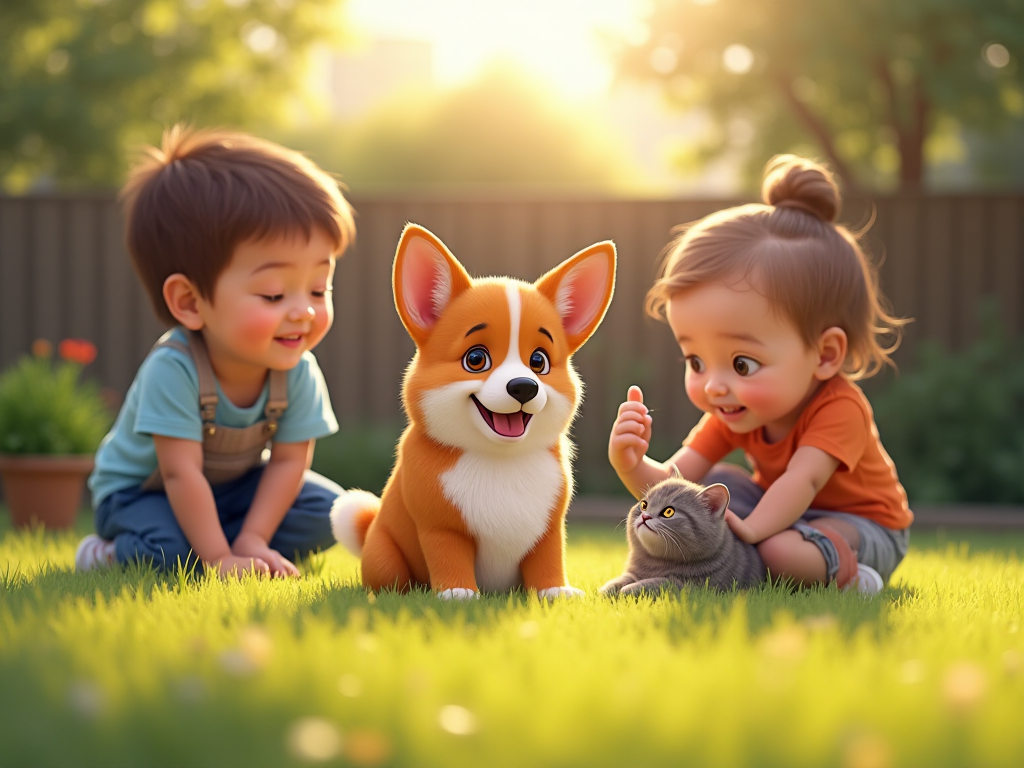
Socialization during the critical period (3-14 weeks) is paramount for shaping a Corgi’s temperament. Proper exposure helps prevent fear-based aggression and anxiety later in life. Puppies that meet calm, well-behaved children and other pets in positive settings learn to see them as friends, not threats.
This foundation makes subsequent training easier and promotes harmonious coexistence. Without adequate socialization, Corgis may become wary or reactive, making family life challenging.
Even after the puppy stage, ongoing socialization through regular interactions and varied experiences maintains their adaptability. Families should prioritize socialization as an ongoing process, not a one-time event.
Training Basics: Channeling the Bossy, Assertive Corgi Nature
Corgis are intelligent and eager to please, but they can also be stubborn and bossy—traits inherited from their herding ancestry. Early training is essential to channel their assertive, energetic nature positively (AI Overview). The most effective approach uses firm, consistent rules combined with positive reinforcement: treats, praise, and play rewards for desired behaviors.
Harsh corrections or punishment can backfire, causing fear or defiance. According to familyvet.net, Corgis are “easily motivated and trainable,” making them responsive to reward-based methods. Training should begin as soon as the puppy arrives home, focusing on basic commands like sit, stay, come, and leave it.
Consistency among all family members is crucial; mixed signals confuse the dog. Because Corgis are smart, they can learn quickly but may also test boundaries, so patience and persistence are key. Proper training not only curbs unwanted herding behaviors but also establishes the owner as a calm, capable leader, which Corgis respect.
Family Involvement: Training Kids and Dogs Together
Training a Corgi for family life is a collective effort. Key practices:
- Teach children how to pet, play, and handle the dog gently, avoiding pulling tails or ears (nativepet.com, reddit.com).
- Involve kids in training sessions under adult supervision to reinforce learning and build bond (nativepet.com).
- Establish and enforce clear rules for both dog and children, such as no rough play, no chasing, and designated safe spaces (AI Overview: active management).
- Ensure all family members use the same commands, routines, and expectations to avoid confusing the dog (adoptapet.com).
When everyone in the household is on the same page, the Corgi receives clear signals about acceptable behavior, reducing confusion and potential conflicts. This unified approach fosters a respectful relationship between the dog and all family members, leading to lasting harmony.
Ultimately, a Welsh Corgi’s herding instinct—often seen as a challenge—is actually a testament to their intelligence, loyalty, and work ethic. When these traits are properly channeled through training and socialization, Corgis become devoted, well-behaved family members. If you’re considering adding a Corgi to your home, start by exposing your puppy to positive experiences with children and other pets from 8 weeks old, and enroll in a puppy training class within the first month.
To determine if a Corgi is right for your lifestyle, read Is a Welsh Corgi the Right Dog for Me?. Remember, every Corgi is an individual, so assess your specific dog’s needs and adjust accordingly.